Why you want "no-matches" in your address verification API results




When it comes to address verification, getting a match every time might seem like the goal. After all, a system that always returns a validated address must be working perfectly, right?
Wrong.
If your address verification API always forces a match, no matter what, it’s not being helpful. It’s actually introducing risk. In fact, getting a “no match” result can frequently be the smarter, safer outcome.
Let’s talk about why.
What is a "no match" telling you?
A “no match” means the input address doesn’t align with any known, valid address in the reference database. This could happen for several reasons:
- The address is brand new and hasn’t yet been recorded.
- The address is invalid or, worse, potentially fraudulent.
- Key parts of the address (like a unit number) are missing.
In these cases, a “no match” is a signal, not a system failure. It means the API didn’t find a high-confidence match and requires a human or programmatic review before continuing. That’s a win.
If you force a match instead, you might be rewriting the address to something incorrect just to make it look valid. That’s one way data corruption starts.
How Smarty handles "no match" responses
Here’s a simplified example of how Smarty’s address validation API might respond.
Consider this input:
102 Stolencredit rd
Shelbyville, KY
Did you actually want your API to match with this address instead:
101 Stonecrest Rd Shelbyville, KY 40065
With a Levenshtein score of less than 5, "Stolencredit Rd" and "Stonecrest Rd" are practically neighbors. This is especially true if an address tool’s matching algorithm is too aggressive.
Or would you prefer to know that the only thing about it that can be matched is the city+state+zipcode?
Smarty returns the following, indicating A1, meaning that the address doesn't match a known address.
[
  {
    "input_index": 0,
    "candidate_index": 0,
    "delivery_line_1": "101 Stolencredit Rd",
    "last_line": "Shelbyville KY",
    "components": {
      "primary_number": "101",
      "street_name": "Stolencreditca",
      "street_suffix": "Rd",
      "city_name": "Shelbyville",
      "state_abbreviation": "KY"
    },
    "metadata": {
      "precision": "Unknown"
    },
    "analysis": {
      "dpv_footnotes": "A1",
      "active": "Y",
      "footnotes": "F#",
      "enhanced_match": "none"
    }
  }
]
This explicitly tells you that the input address didn’t produce valid match candidates.
Smarty can tell you when something’s missing, unnecessary, or suspicious (depending on how you configure your end of the deal).
AND if we change any component of an address to obtain a match, we’ll tell you what we changed, AND WHY.
Clean, clear, and ready for next steps.
Contrast that with an aggressive fuzzy match system that silently rewrites “1002 Suncrest Lane” to “1010 Suncrest Blvd” (which could be a full mile away), and you’re setting yourself up for bad data decisions.
False positives and why you should fear them

A false positive is when your tool tells you an address is valid, but it’s wrong. That’s where forced matches usually get dangerous.
Here’s how this plays out across multiple industries:
Retail/Ecommerce
A wrongly “corrected” address leads to failed deliveries. Harvard Business Review notes, "Up to 20% of ecommerce packages aren't delivered on the first attempt. These failed deliveries not only cost companies billions of dollars each year, they also impact customer satisfaction and damage retailers’ reputations.”
Without an accurate address verification API that identifies no-matches or tells you when they change an address to obtain a match, you incur chargebacks, reshipping costs, and frustrated customers, leading to reputational damage.
Fintech
If you’re “validating” a fraudulent address, that’s a KYC compliance nightmare. Global financial crime compliance costs $61 billion in 2024. Financial crime compliance costs have increased for 99% of financial institutions. Don't help fraudsters out with bad address validation. A no-match in fintech is better than a forced match that a bad actor can use to dupe you and the system.
Insurance
Location affects underwriting, risk models, and premium rates. If you get the location wrong, you might deny a legitimate claim or misprice a policy. The U.S. insurance industry loses $308 billion to fraud annually.
An address verification tool that doesn’t appropriately utilize and flag no-matches is contributing to this staggering number. When an entered address is forced to match by making a change to the address, it’s the typical wolf in sheep’s clothing scenario. This false positive is costing insurance providers big time.
Healthcare
Mistakes in address matching can be life-threatening. Imagine prescriptions going to the wrong house or patient records linked to someone else. The National Health Care Anti-Fraud Association (NHCAA) estimates that the financial losses due to health care fraud are in the tens of billions each year.
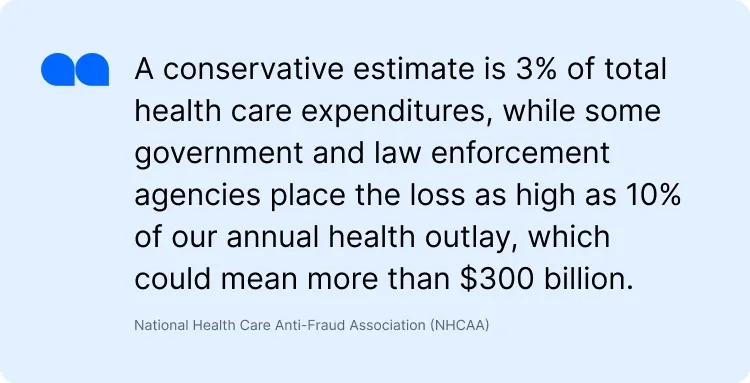
Fraudulent activities, including billing for services not rendered and unnecessary treatments, contribute substantially to these numbers.
No-matches in your system can be incredibly useful in cutting down on this cost for your organization. If there really is no true match for an entered address, it doesn’t always signal fraudulent activity, but it could be a useful red flag that your teams need to investigate a little further before sending the supplies out.
Logistics/Last-mile delivery
Wrong addresses create ripple effects—misrouted packages, wasted time, reattempts. Failed deliveries cost U.S. retailers an average of $17.20 per order (not counting the cost of lost confidence with the customer), with approximately 8% of domestic first-time deliveries failing. If you can’t confidently match an address, you should know before you ship, not after it’s been rejected, especially when it comes to highly-priced, heavy, or difficult-to-ship items.
When “no match” is a good thing
It might feel counterintuitive, but “no match” means your system has standards. That’s a good thing. The benefits include:
- Data integrity – Keeps your records clean and up to date, even as addresses change over time.
- Fraud prevention – Flags shady or fabricated addresses for your teams to do a little more investigation on.
- Customer satisfaction – Ensures people actually get their stuff the first time.
- Regulatory compliance – Keeps you in the clear with the law and other regulations.
- Operational efficiency – Cuts waste from shipping errors in terms of time, effort, billed hours, materials, customer service turnover, and more.
What to do when you get a "no match"
When you get a “no-match” response from your API, don’t panic. Just follow this playbook:
- Prompt your users to correct their address (suggest unit numbers, ZIP Code fixes, etc.).
- Enable manual review for customer support or internal teams to dive into anything that seems amiss.
- Educate the user. Explain why their address didn’t validate and guide them on what to do to fix it.
Oh, and we cover a lot of this in our guide to address exception handling, so feel free to crack that free digital download open if you’d like to learn more.
We also have another source where you can learn more about the different matching types if you use Smarty’s address verification tools.
Don’t let your API provider gaslight you
Now, moderation in all things is important. Of course, you don’t want a provider who has a zillion no-matches. That’s just silliness. But, a verification tool that never gives you “no match” results isn’t doing you any favors (and is lying to you). It’s hiding problems and letting bad data in through the back door.
Try Smarty’s US Verification for yourself
Want to see what trustworthy address validation looks like?
Smarty won’t force a match when there isn’t one—and that’s by design. Our tools are built to catch errors, prevent fraud, and make your operations more efficient. Get started at https://smarty.com/products.