
Tariffs are high. Your address accuracy should be higher.
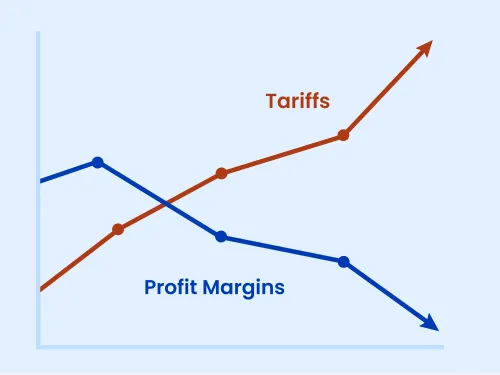



Tariffs are spiking. Shipping costs are climbing. Margins are shrinking.
You can’t control global trade policy, but you can control how efficient and accurate your operations are in response.
Most ecommerce teams, logistics planners, and data managers miss one of their best cost-saving opportunities: addressing accuracy.
Bad address data isn’t hidden. It sits in your systems, shows up in carrier returns, and quietly drains profits every day.
When tariffs rise to 15 to 50 percent in some product categories and import volumes are falling, every shipment becomes more expensive, every delay costs more, and every lost customer hurts more.
Fixing bad address data won’t reduce tariff rates.
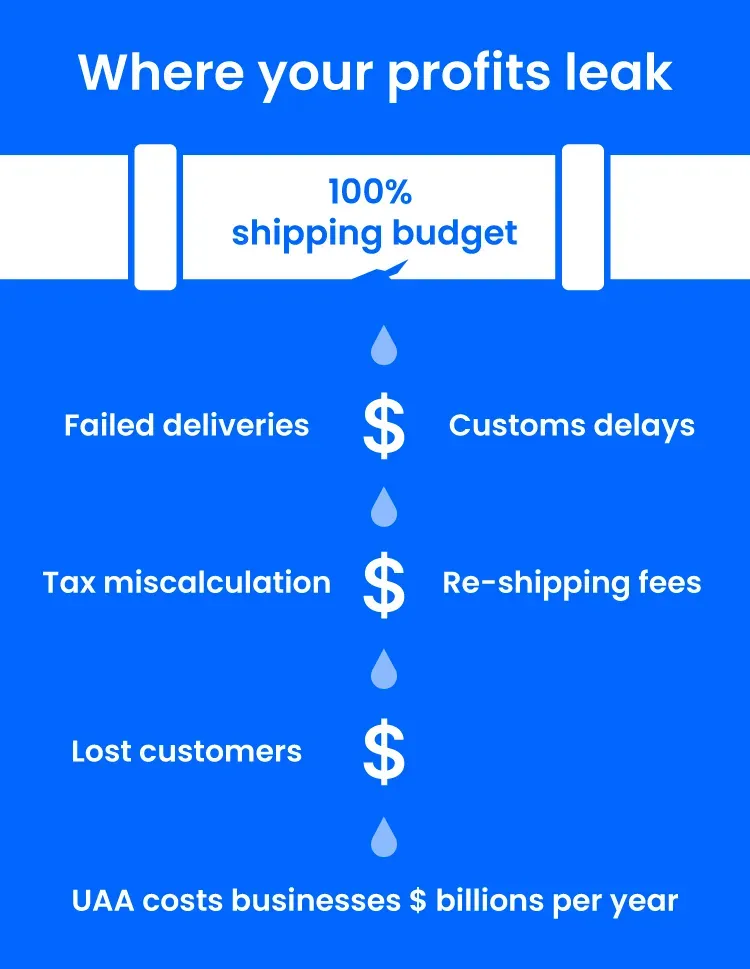
But it will prevent failed deliveries, avoid customs delays, stop tax errors, and cut re-shipping costs. This means happier customers, stronger margins, and fewer "where is my order" calls from your operations team.
You can try out some of Smarty’s tools right now to see how your accuracy could improve, or keep reading below to learn more about address data accuracy and how it can help you combat the rising costs of doing business internationally.
| US Address Autocomplete | International Address Autocomplete | US Address Verification | International Address Verification |
| CTA: Try It Now | CTA: Try It Now | CTA: Try It Now | CTA: Try It Now |
Before we dive in, here is what you will learn in this guide:
- Tariffs: Policy AND price tags
- Address accuracy is your tariff strategy’s secret weapon
- Brands are already adapting their address data strategy
- How to win in a high-tariff world
- What’s coming next: automation, accuracy, and address-powered savings
- Final takeaway
Tariffs: Policy AND price tags
Before you can fix the problem, you need to understand it. Tariffs are taxes on imported goods, but don’t just sit on government spreadsheets. They quickly become higher prices, slower shipping, and tighter margins that impact your bottom line.
Here’s what’s happening locally:
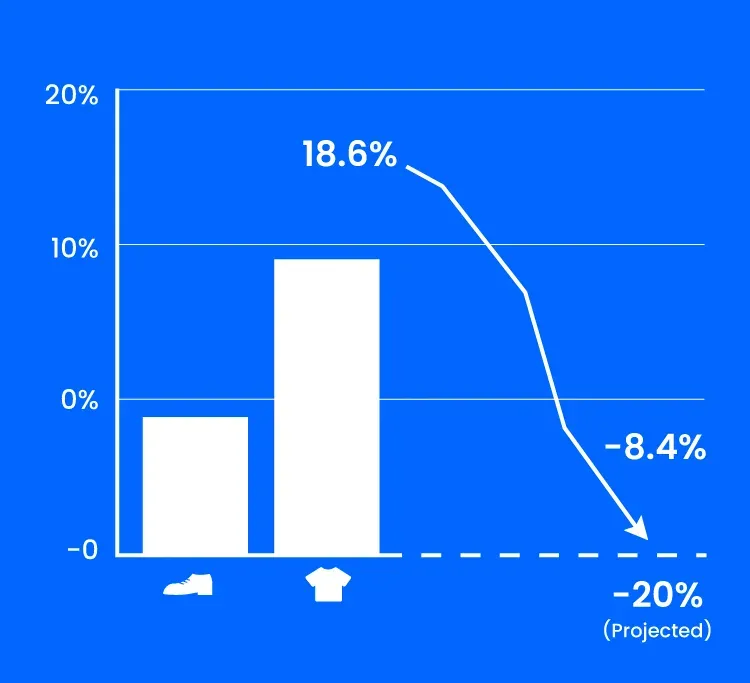
- In the U.S., the average tariff sits at 18.6%, the highest since 1933.
- The overall 1.8% price level rise from all 2025 tariffs is costing the average household income a loss of $2,400.
- Clothing and textiles are disproportionately affected, with a recognized higher percentage of 39% for shoes and 37% for apparel in the short run and ~19% higher in the long run.
- U.S. imports dropped 8.4% year-over-year in June 2025, and cargo volume is projected to dip another 20% heading into fall.
Now layer on what’s happening globally:
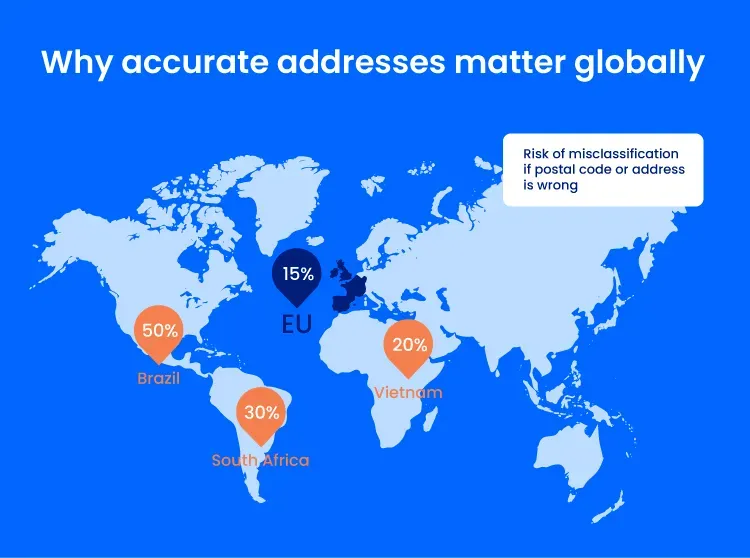
- Many essential goods face 15–50% duties, specifically
- 50% tariffs on Brazilian goods
- 30% tariffs on South African goods
- 20% tariffs on Vietnamese goods
- And more
- The early end to the de minimis rule on August 29, 2025, means that even sub-$800 orders from marketplaces like Etsy are no longer duty-free. Nearly every imported item now comes with a tax bill.
- The U.S.–EU trade deal locked in a 15% tariff on most EU goods, but steel and aluminum remain taxed at 50%, raising input costs for manufacturers and squeezing margins across multiple industries.
This means that every shipment counts, and every delivery needs to land. There’s little room for errors caused by something as preventable as bad address data.
Address accuracy is your tariff strategy’s secret weapon
Tariffs are driven by product classification and destination. And both of those depend on one thing: accurate, complete, properly formatted shipping addresses.
When address data is incomplete, incorrect, or not standardized to a country’s format, all kinds of costly problems show up:
- Incomplete or vague addresses: Correct postal codes and complete address fields also matter. Many tariff engines use postal code + country to calculate duties. A missing or invalid postal code can send a package into manual review limbo or cause it to be overcharged.
- Missing or incorrect postal codes: These break tariff calculators that depend on country + postal code, often assigning the wrong HS code and inflating duties.
- Non-standardized formats: Leaving out apartment/unit fields or misordered country codes) can trigger manual customs reviews, storage fees, and costly delays.
And that’s before even considering the everyday operational drag of maintaining a messy address database.
Duplicate records bloat costs by sending marketing mailers or promotional shipments multiple times to the same household.
Worse, Undeliverable As Addressed (UAA) mail is a money sink for customer-facing and back-office operations. In the U.S. alone, UAA costs businesses and the Postal Service billions annually in wasted postage, printing, handling, and re-shipping. For ecommerce, a UAA package could mean wasted shipping fees, refunding the customer, eating tariff costs, and risking churn.
In an era of rising tariffs, these aren’t edge cases but everyday risks. And they’re entirely fixable.
Brands are already adapting their address data strategy
Smart companies are connecting the dots and making address quality part of their operational edge.
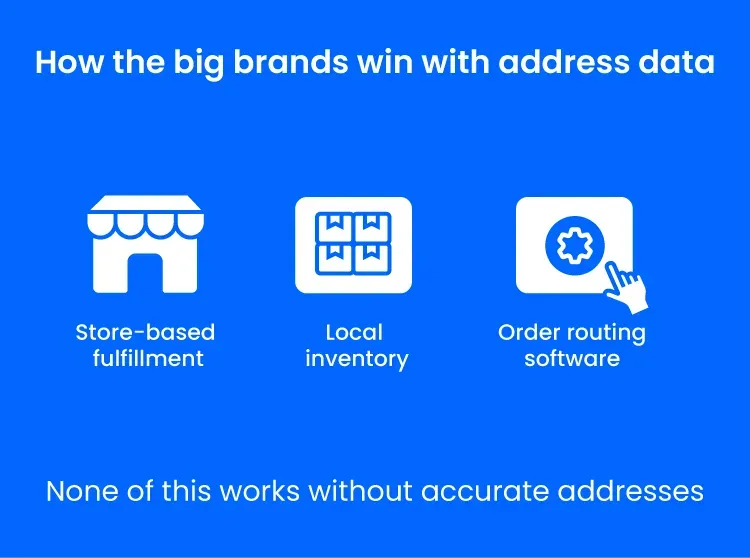
- Target fulfills over 80% of its online orders from store inventory, transforming its 1,900+ U.S. stores into micro-fulfillment hubs for faster local delivery.
- Walmart uses thousands of its retail locations for fulfillment. More than half of online orders are handled directly from stores, enabling rapid same-day and next-day delivery through local inventory.
- Best Buy also leverages store stock for online order fulfillment, which helps meet customer demand quickly and reduces the strain on central warehouses.
- Walgreens, CVS, and Target have all expanded store-based shipping to offer competitive delivery speeds and improved inventory efficiency. From a unified stock pool, they serve both in-store and online customers.
- Store fulfillment strategies also encompass curbside pickup, buy-online-pickup-in-store (BOPIS), and direct shipping from the nearest retail outlet, all of which help retailers provide more flexible and responsive service.
- Technological solutions such as store inventory management systems and order routing software are common investments to support accurate and efficient in-store fulfillment operations.
None of these strategies work without having address accuracy at the center.
How to win in a high-tariff world
If you’re still cleaning up address errors post-checkout or hoping your carrier catches them, you're already behind. With tariffs this high, you must get address data right first.
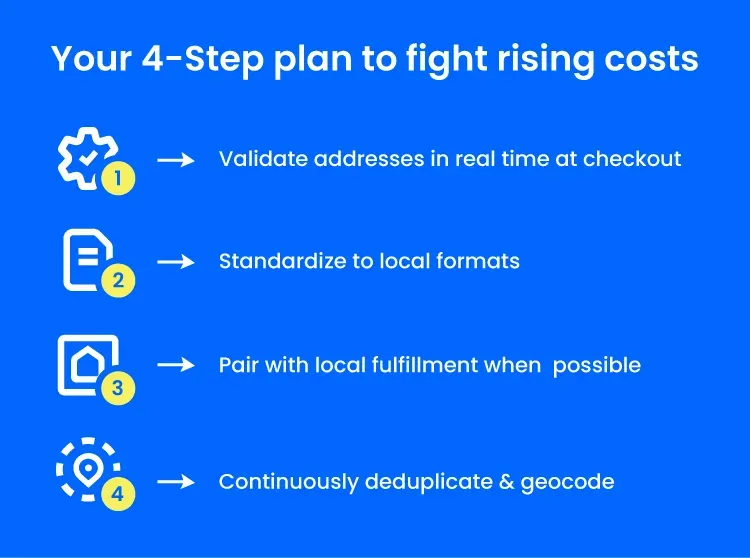
Start by validating addresses in real time at checkout with an autocomplete solution that ONLY suggests valid addresses, like Smarty’s!
Ensure the whole country, postal code, street name, building number, and apartment/unit details are in place and correct. Use tools that localize address formats to the recipient’s country, especially when shipping globally.
Don’t just validate for existence. Validate for deliverability according to your business strategy.
Next, pair address quality with local fulfillment when possible. Ship domestically to avoid tariff-prone international routes. And if you must ship cross-border, make sure your address data is airtight to prevent customs surprises.
Major retailers continuously track trade policy shifts to adapt sourcing and inventory strategies. You don’t need their logistics budget to do the same, but you need clean, trusted address data as your foundation.
What’s coming next: automation, accuracy, and address-powered savings
We’re already seeing the next wave of address-enabled solutions hit the market.
We might expect tariff calculators at checkout that rely on verified addresses to calculate landed costs before the “Buy Now” button. No more surprises for customers, or your CFO. (Thankfully, Smarty eats the cost of tariffs for you so you won’t see one on our site 😘).
AI-driven fulfillment will soon dynamically route orders through warehouses and shipping lanes, choosing the lowest-cost paths based on tariff exposure, address precision, and delivery SLAs.
As brands increase their focus on sustainability, accurate addresses will become essential for reducing failed deliveries and minimizing waste. Major brands already use delivery success rates to hit carbon goals and customer satisfaction metrics.
Final takeaway
Tariffs are squeezing your margins; there’s no cheat code to turn them off. But address accuracy? That’s a power-up you can activate today and try out for free without even talking to someone or giving us a credit card (although we’d love to chat!).
Every time you validate an address, autocomplete it accurately, or format it to match international standards, you’re preventing a delivery failure, a customs delay, a re-shipment cost, or a tariff misclassification.
And if you’re not doing that yet, now’s the time.
Smarty can help you:
- Autocomplete and validate addresses in real time
- Standardize international formats in over 250 countries and territories
- Reduce false positives and flag incomplete or invalid addresses before they cost you money
- Geocode to rooftop accuracy
- Deduplicate your records with SmartyKey® persistent, unique IDs
Don’t let bad data make your tariff problem worse.
👉 See how Smarty makes your address data work harder (and your shipments smarter) at smarty.com.